Southport Beach
Hazard Rating: 2-3/10 | Parking: Limited | from Hobart: 100 km | Faces: South-Southeast | Length: 600 m
Original people: Lyluequonny (Pangherninghe)
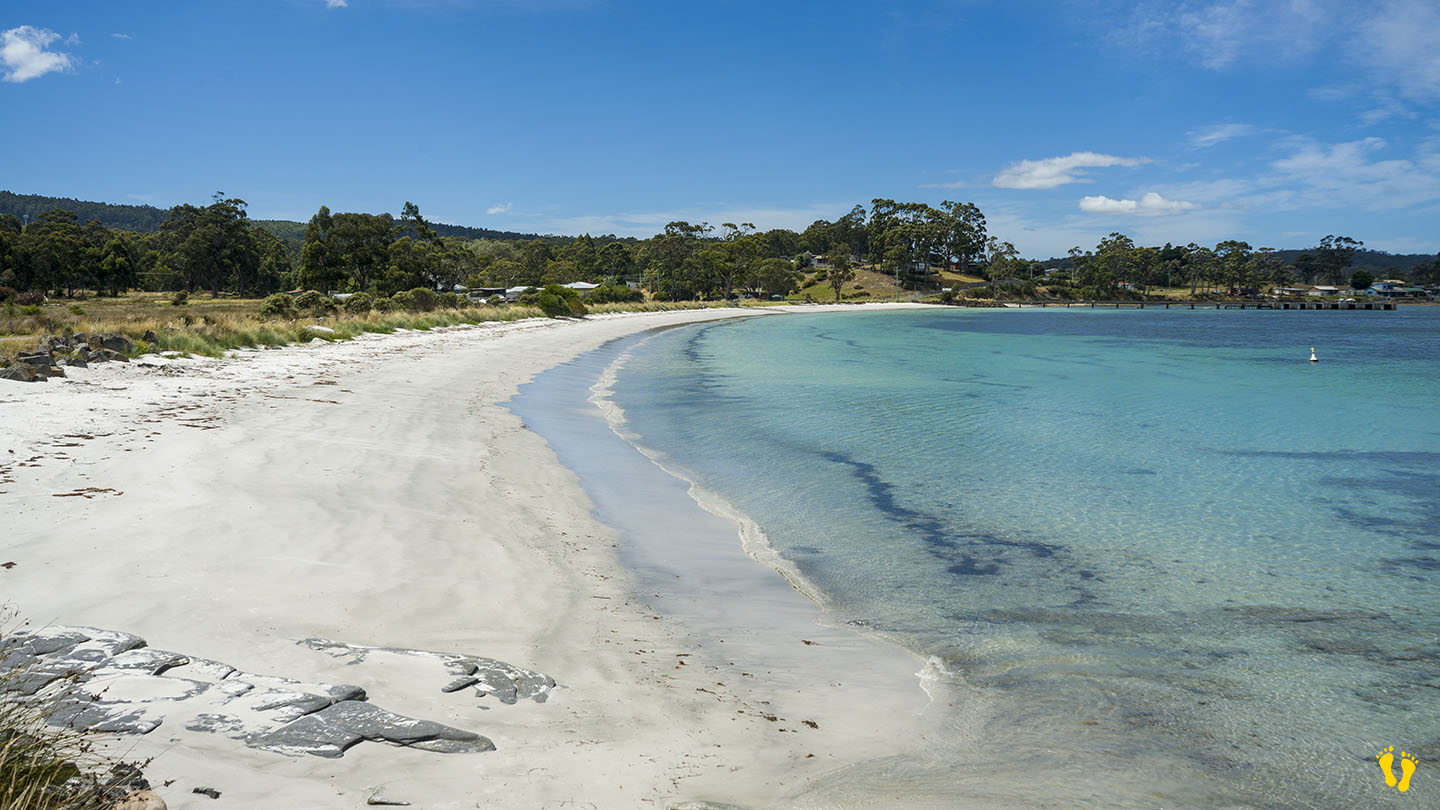
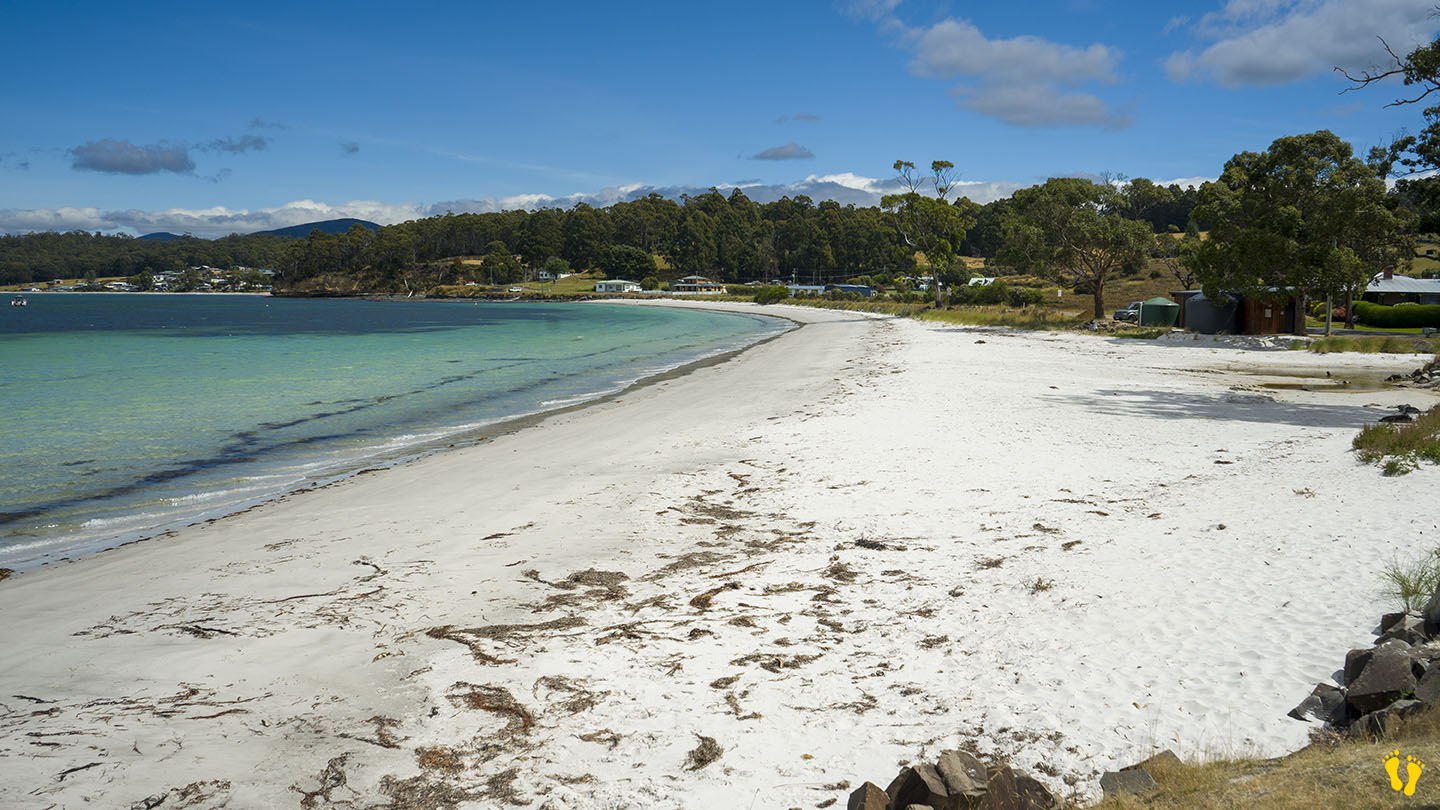
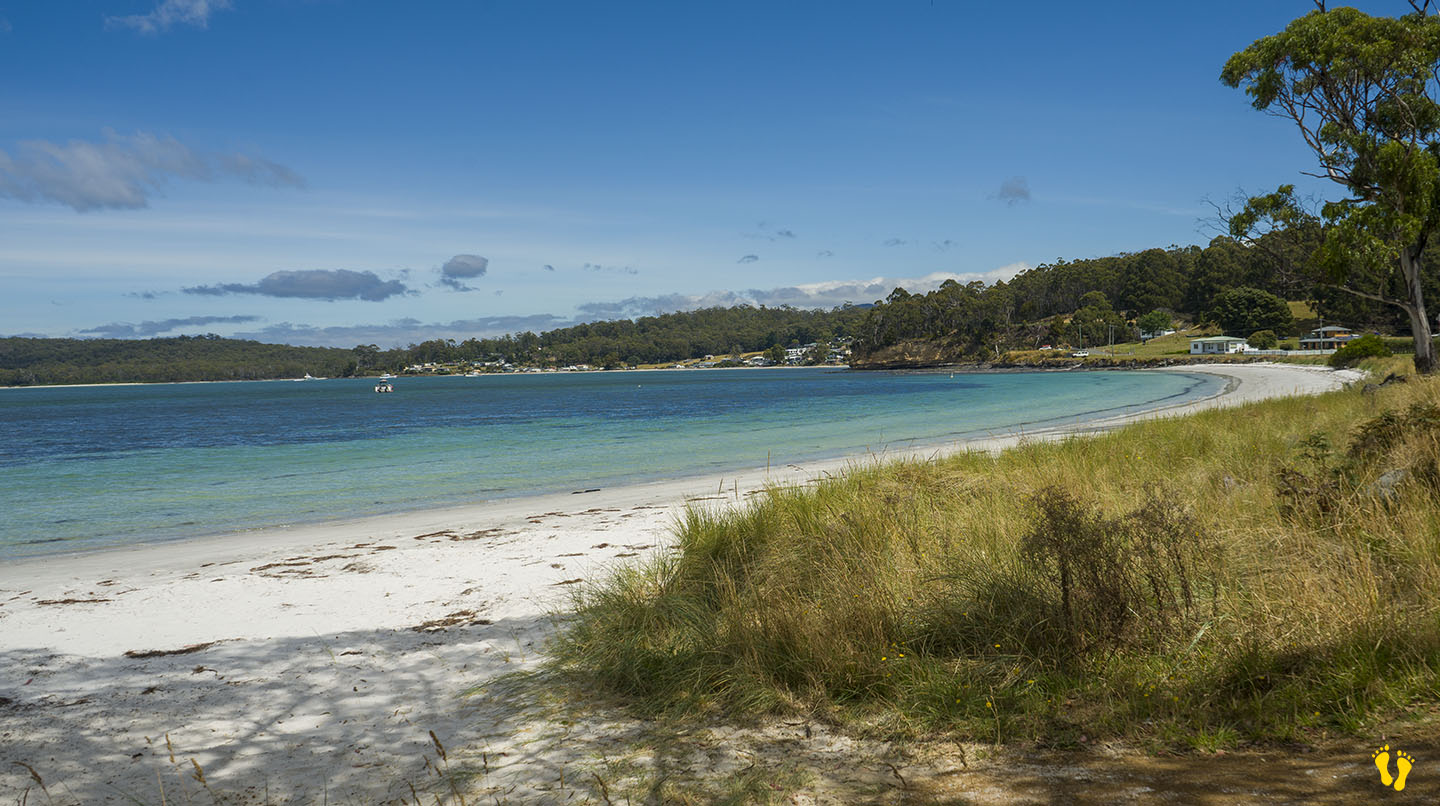
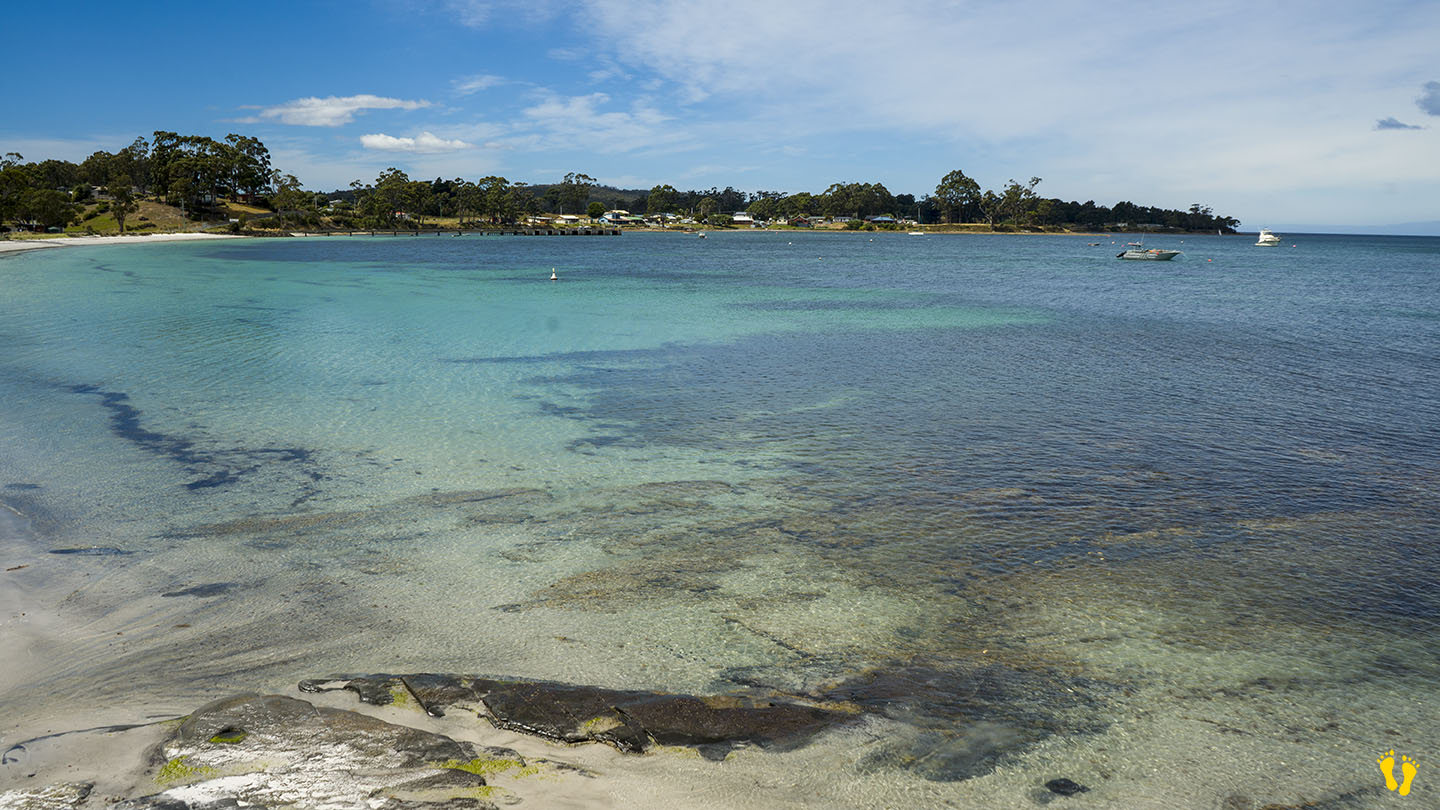
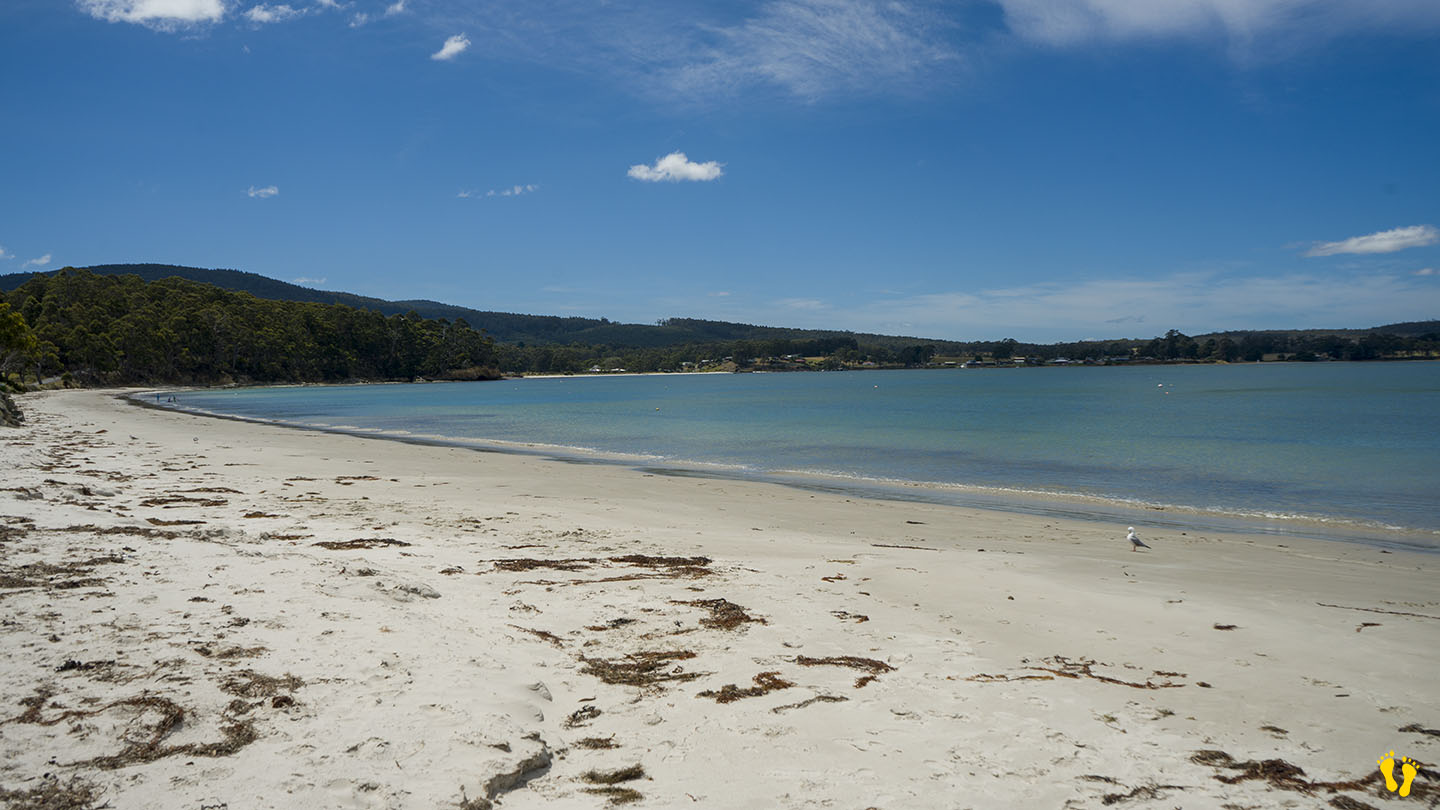
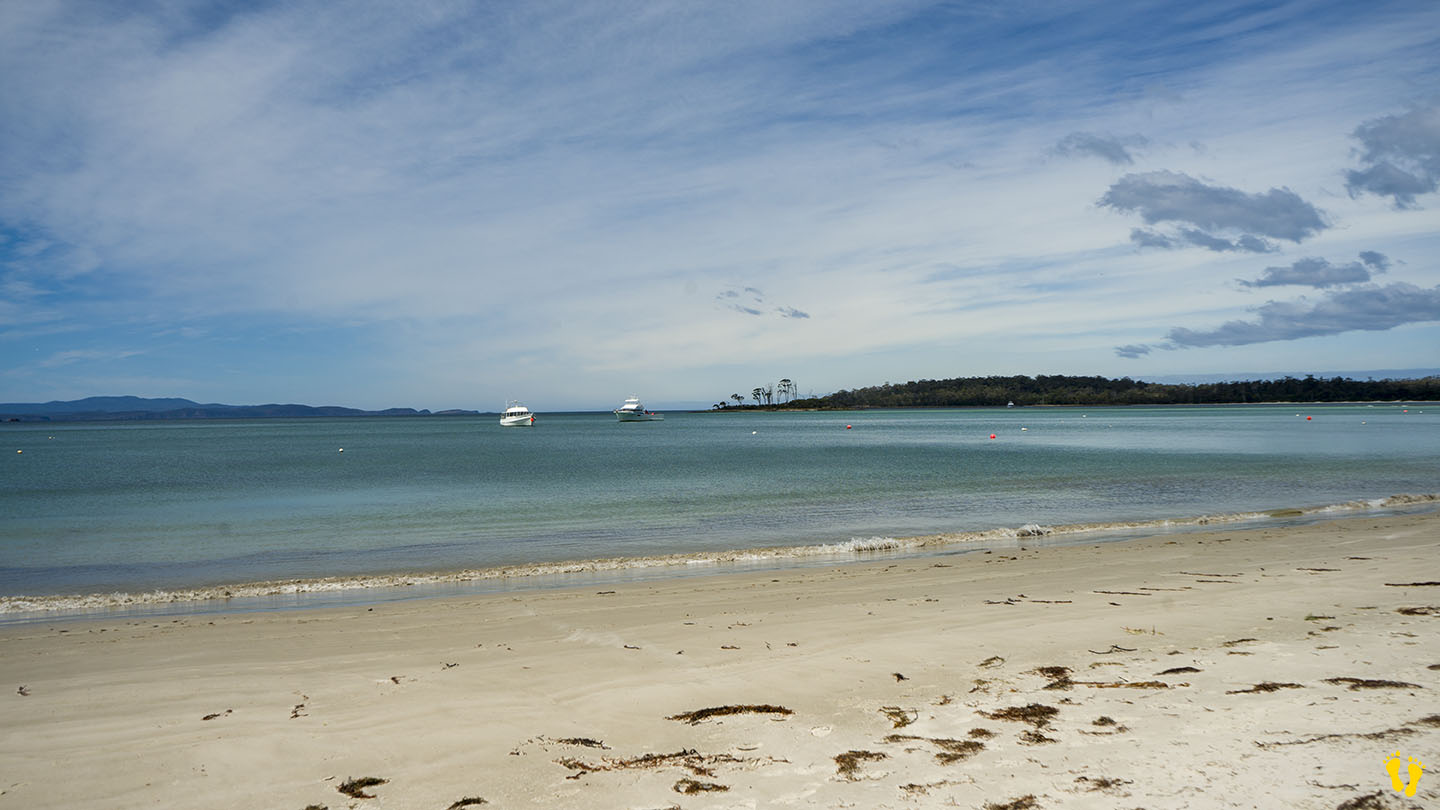
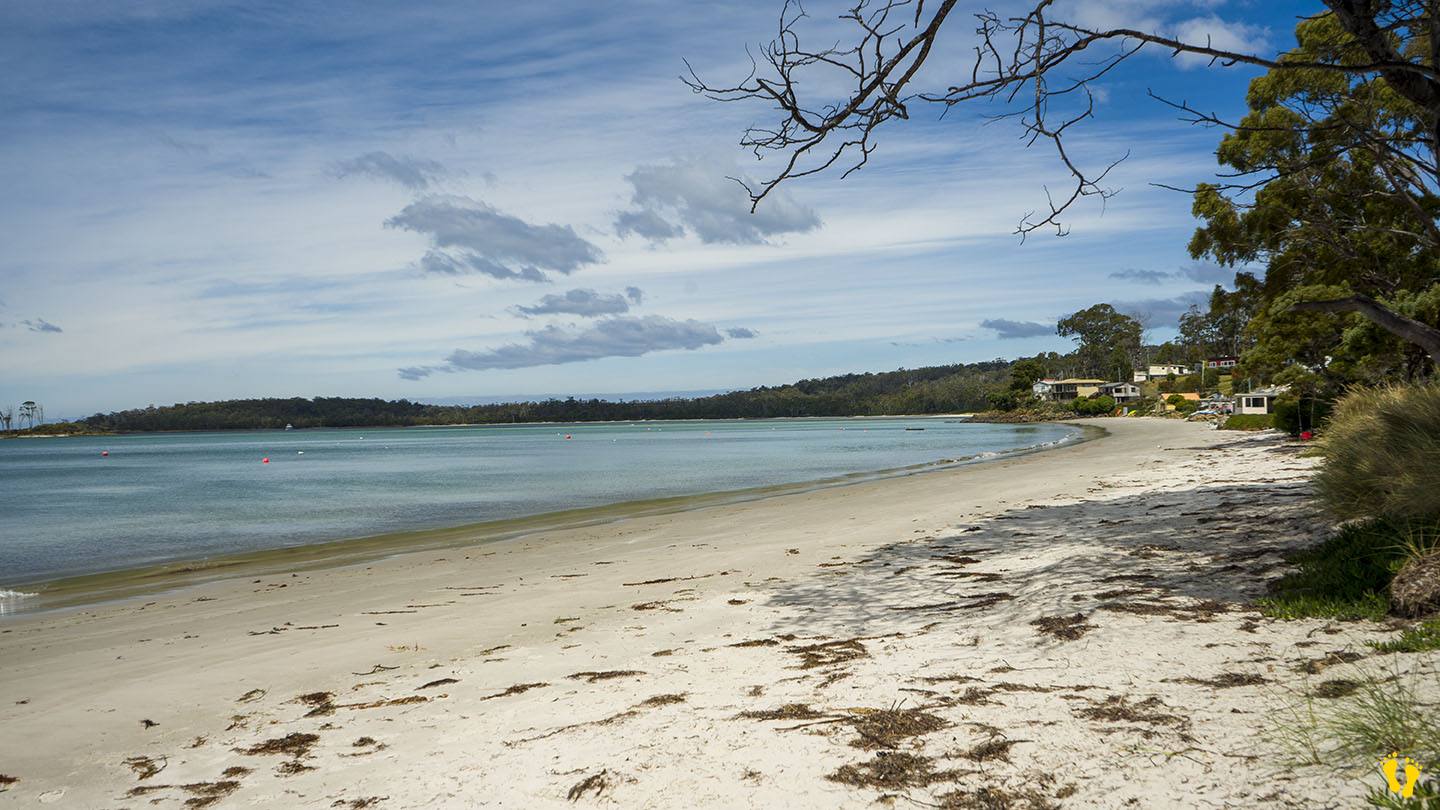
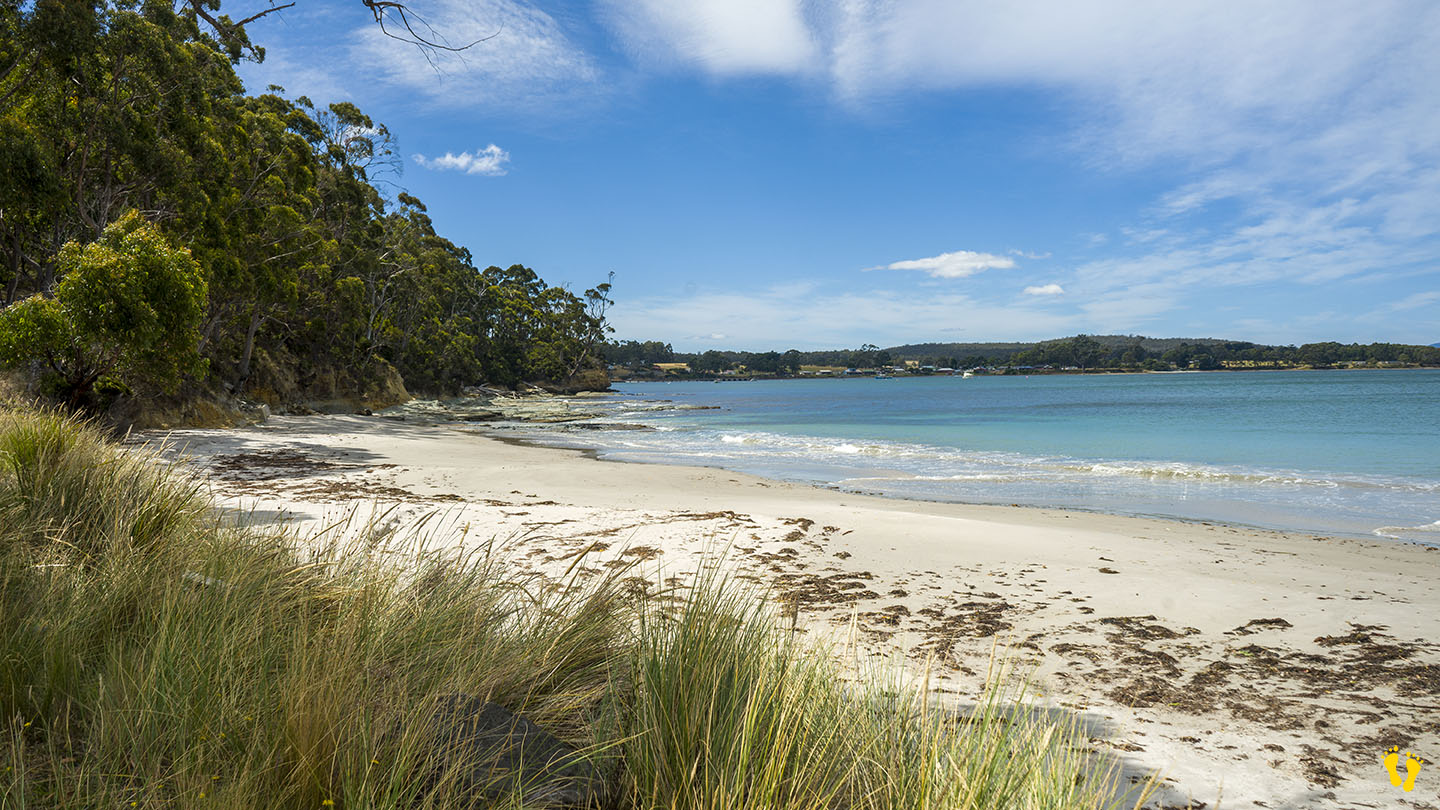
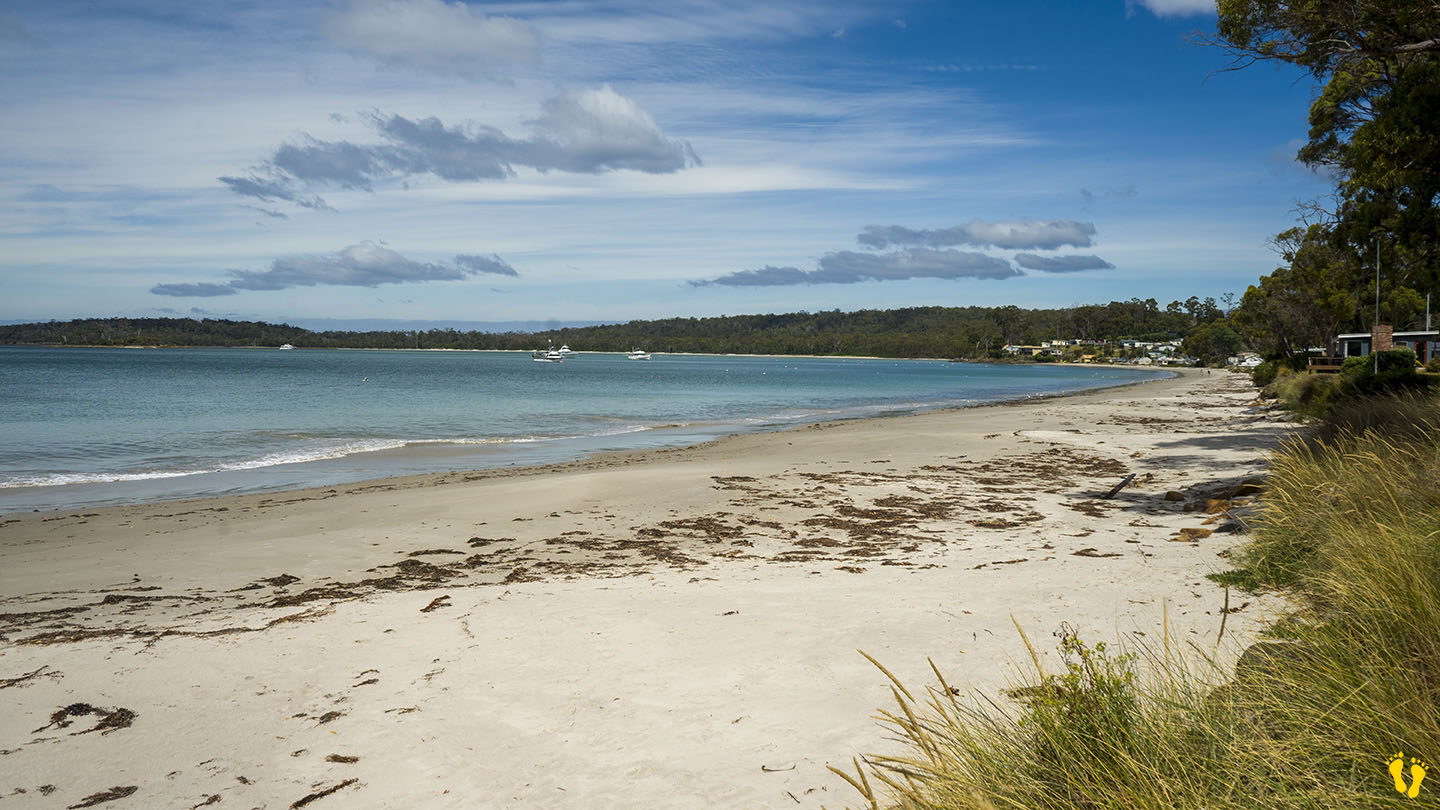
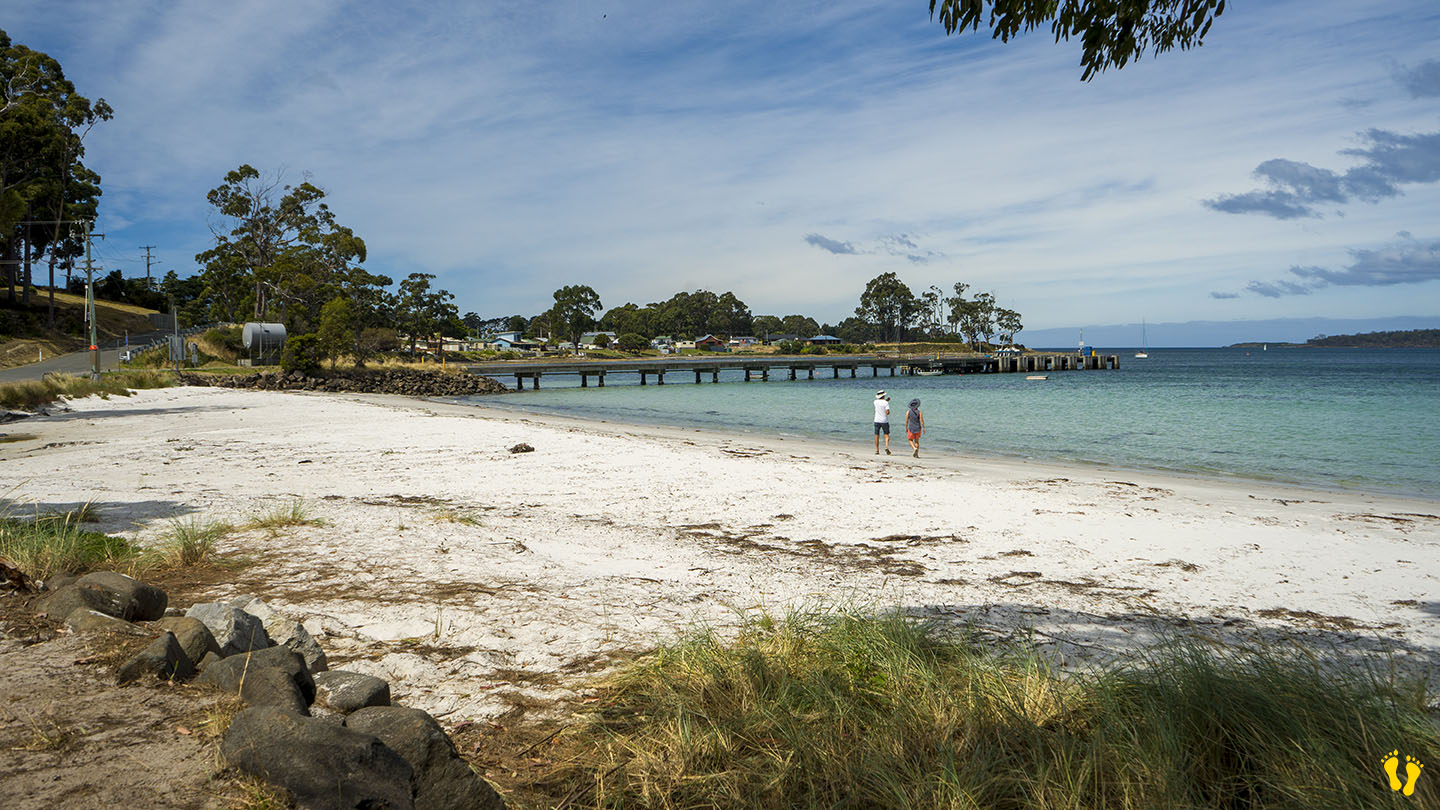
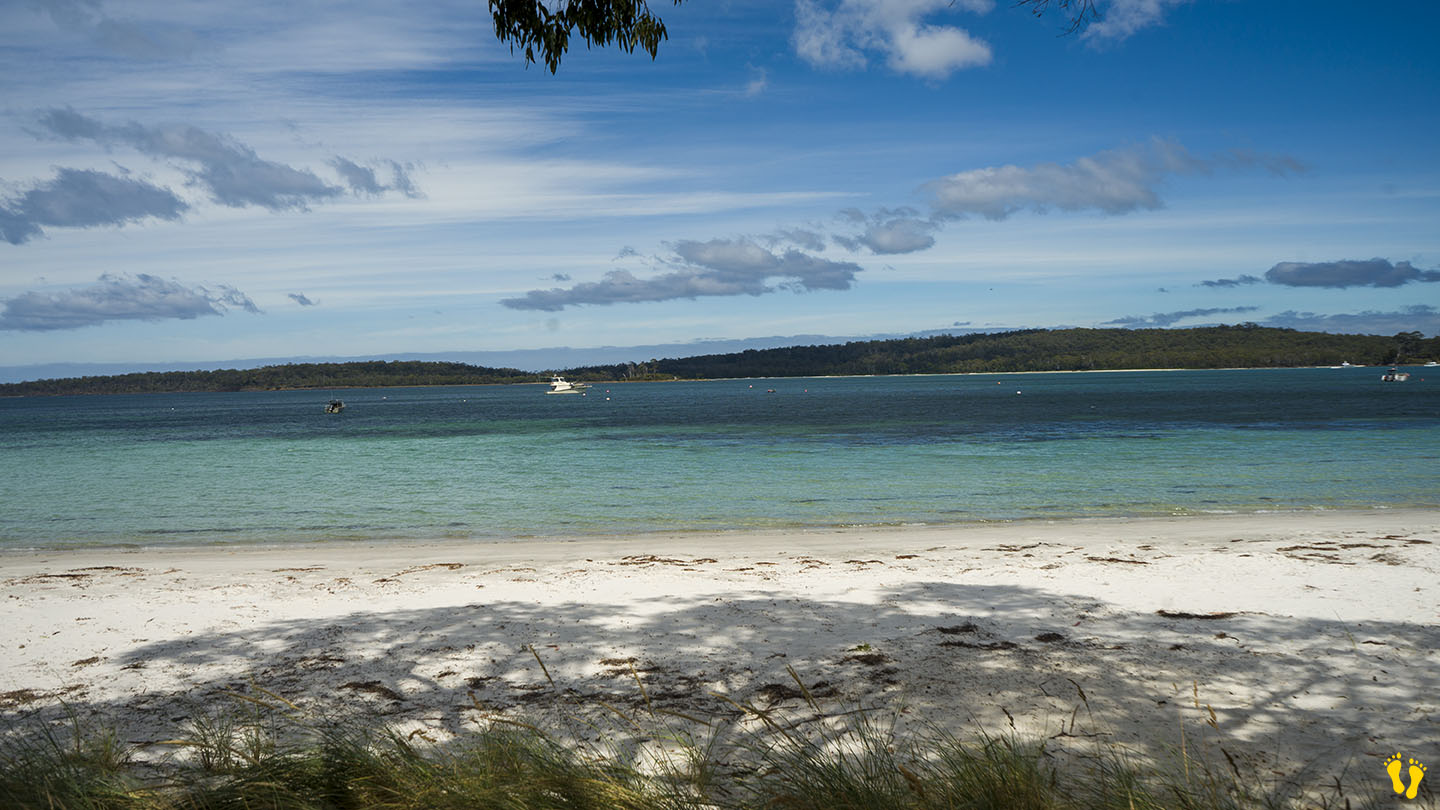
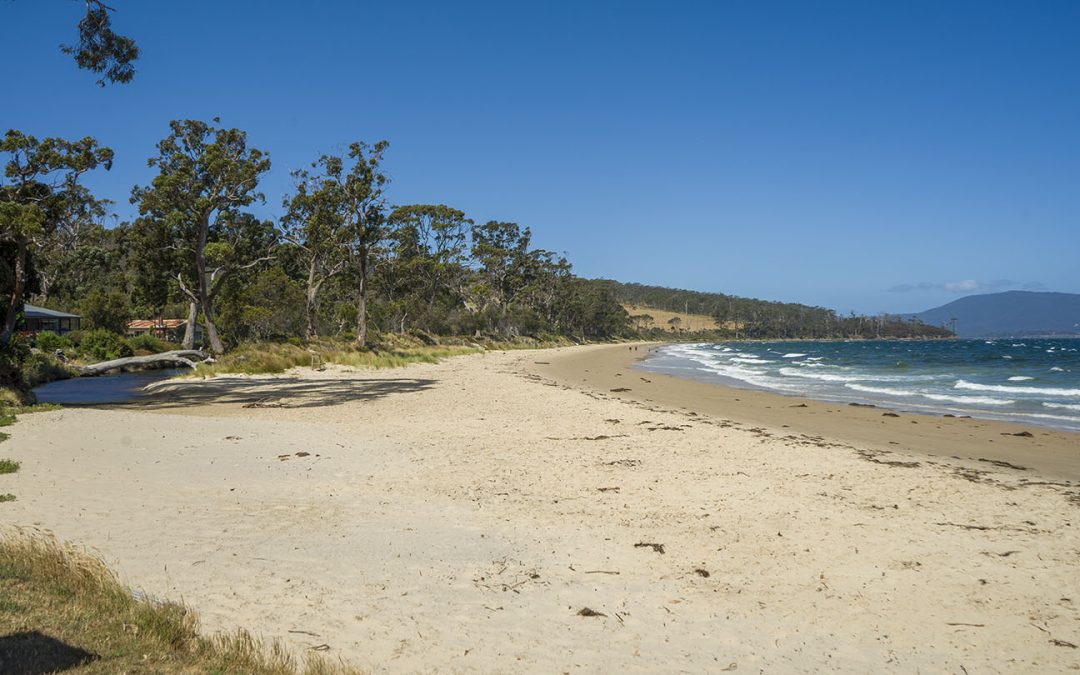
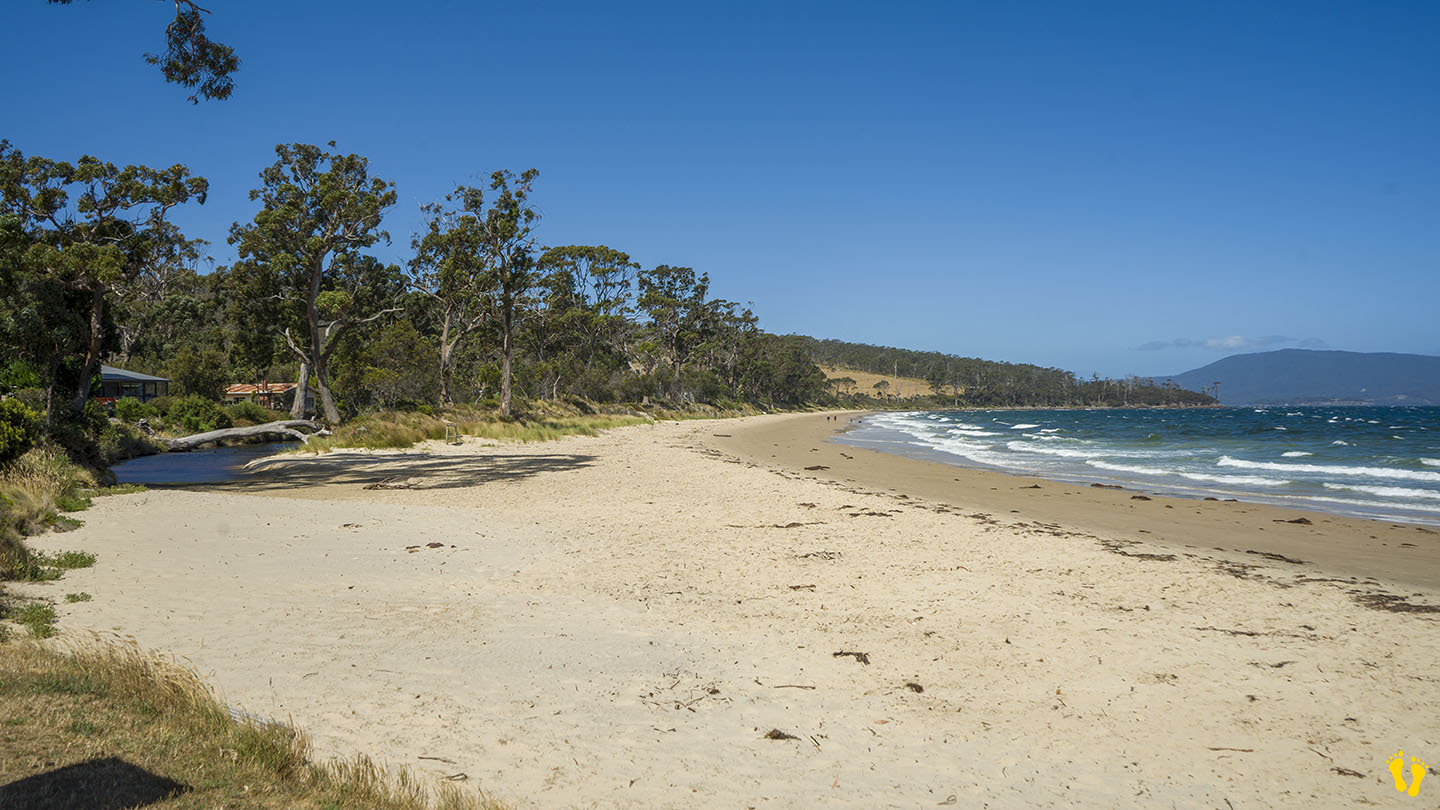
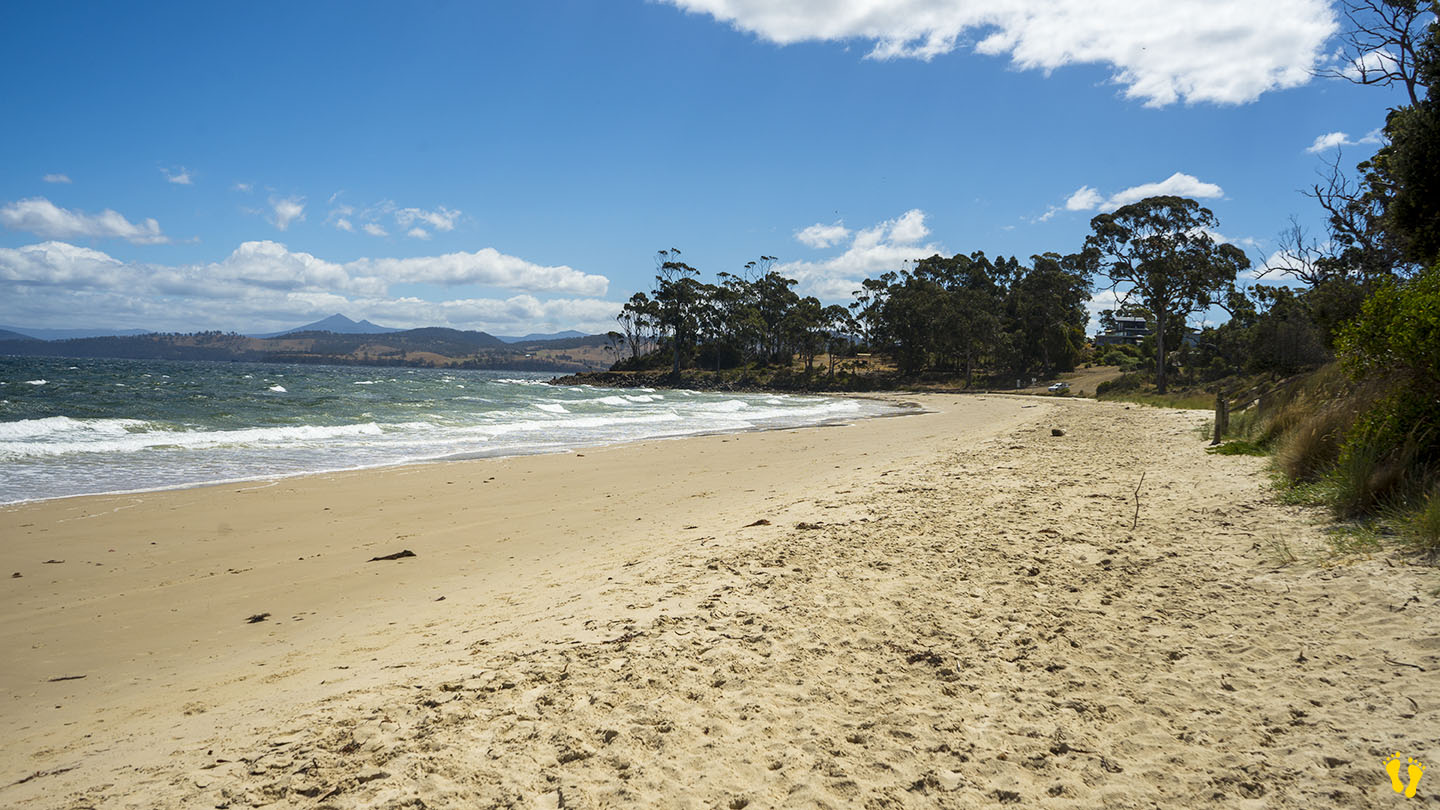
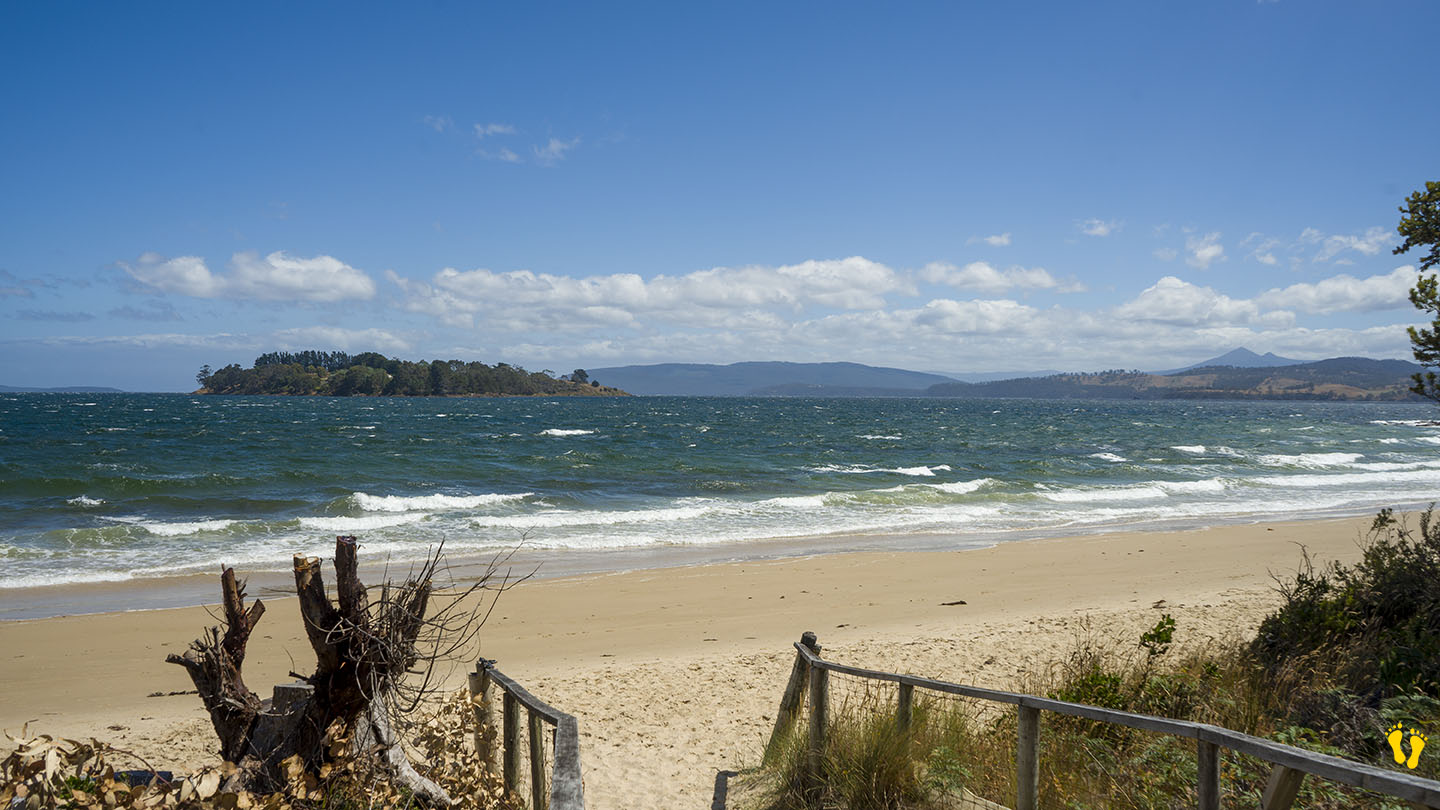
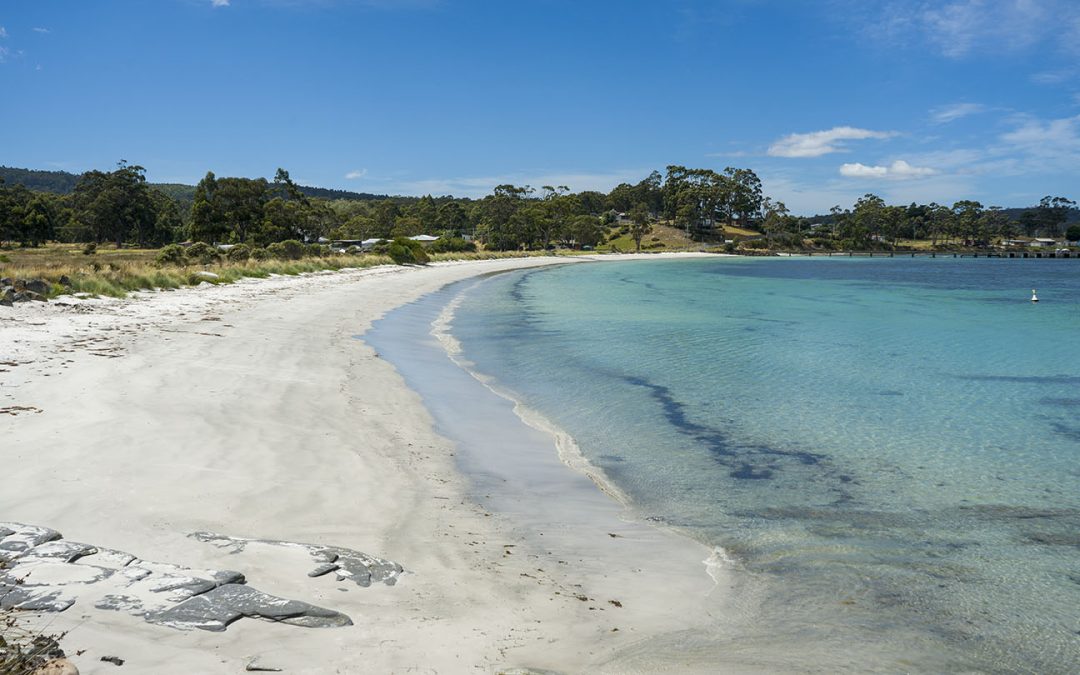
At the end of the Huon Highway 60 km from Huonville. A protected bay with a beautiful beach over 5 km long with pure white sand and aqua-blue water.
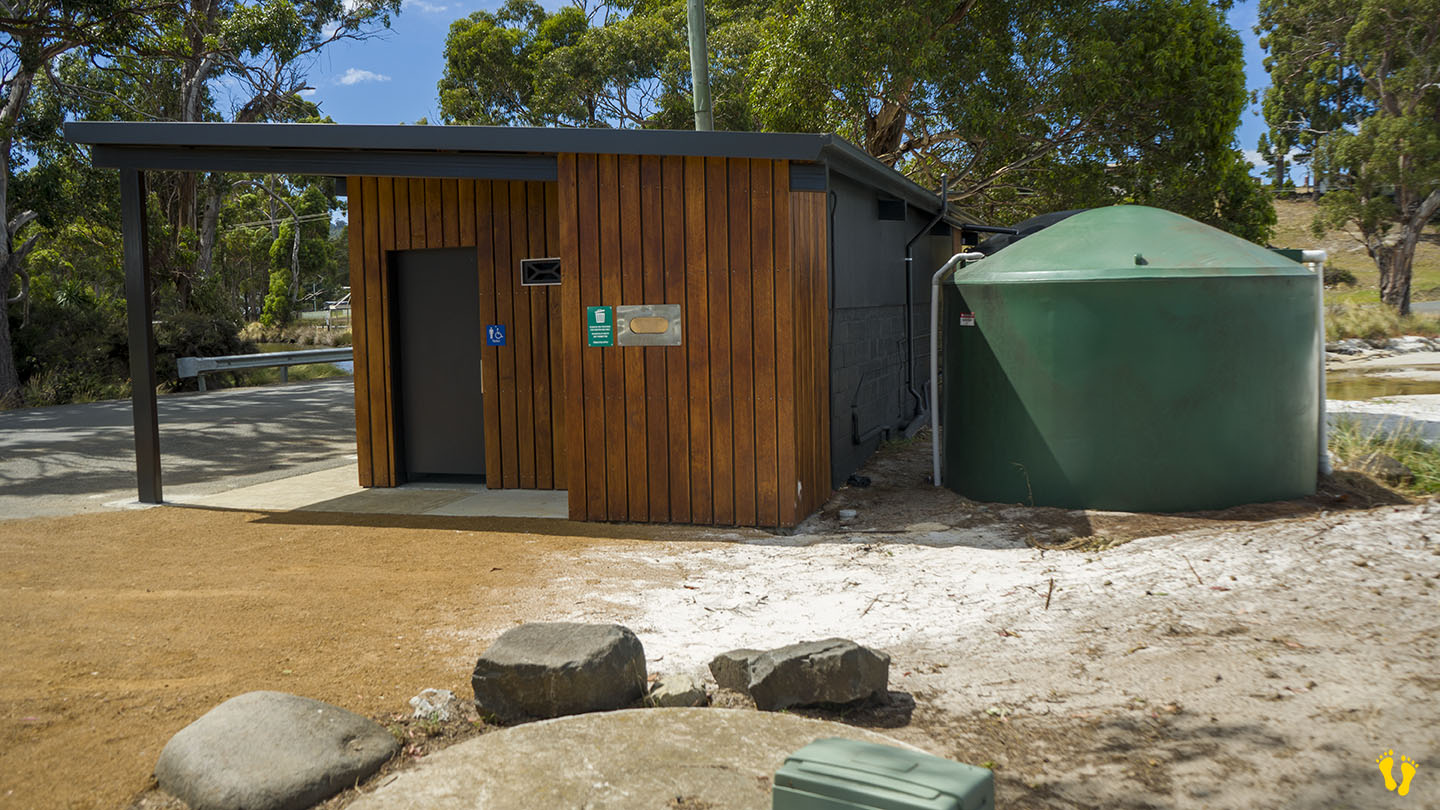
Access to the beach near the jetty has toilets and limited parking. Most of the beach is not easily accessible due to private residences, which is a real pity – potentially one of the best beaches in Tasmania has minimal access. A shop, hotel, caravan and camping ground are about 1km away.
Southport was named ‘Baie des Moules’ (Mussel Bay) in 1792 by the French explorer Admiral Bruni D’Entrecasteaux. The English later established a settlement in 1837 as the seat of the Colonial government in the far south and a convict Probation Station from 1841 to 1848. Settlers arrived in the 1850’s. The township was constructed with the help of convict labour from 1860 to 1920 – an emerging town for whaling, timber, and boat building. Southport was settled with convicts before Port Arthur was established and was once the largest town south of Hobart and the administrative hub of the entire region south of Hobart. A quieter place nowadays with recreational fishing.